Content approvals
5 minute read
Portfolio » Content approvals
Designing content approvals teams can trust
Designing a content approval system focused on risk prevention, giving administrators visibility and control before content reaches employees.
The challenge: An invisible but critical failure point
Large amounts of content are created in WorkJam and shared directly with frontline employees. Without any built-in review or approval process before this content went live, important information was often published without oversight and only corrected after employees had already seen it.
This created a blind spot for administrators. They lacked visibility into what was being published, who had reviewed it, and whether it met internal standards. Fixes relied on post-publish edits increasing the risk of unclear or misleading communication at scale.
The challenge was introducing a missing layer of control and accountability that prevents issues before publication while fitting naturally into existing content workflows.
Why this matters
In enterprise environments, content mistakes are costly once information is live, as a single update can quickly reach thousands of employees. By shifting oversight upstream, this work reduces loss of trust and risk exposure while giving administrators clear visibility and accountability before content reaches the floor.
Strategic approach
I treated this as a system gap, not a missing feature. Content could be published without clear ownership, visibility, or accountability, which made mistakes costly and hard to trace once live.
The strategy was to move control earlier in the workflow. Instead of fixing issues after publication, I extended an existing approval model to support review before content went live. This reused familiar patterns, kept behavior consistent across content types, and reduced long-term complexity.
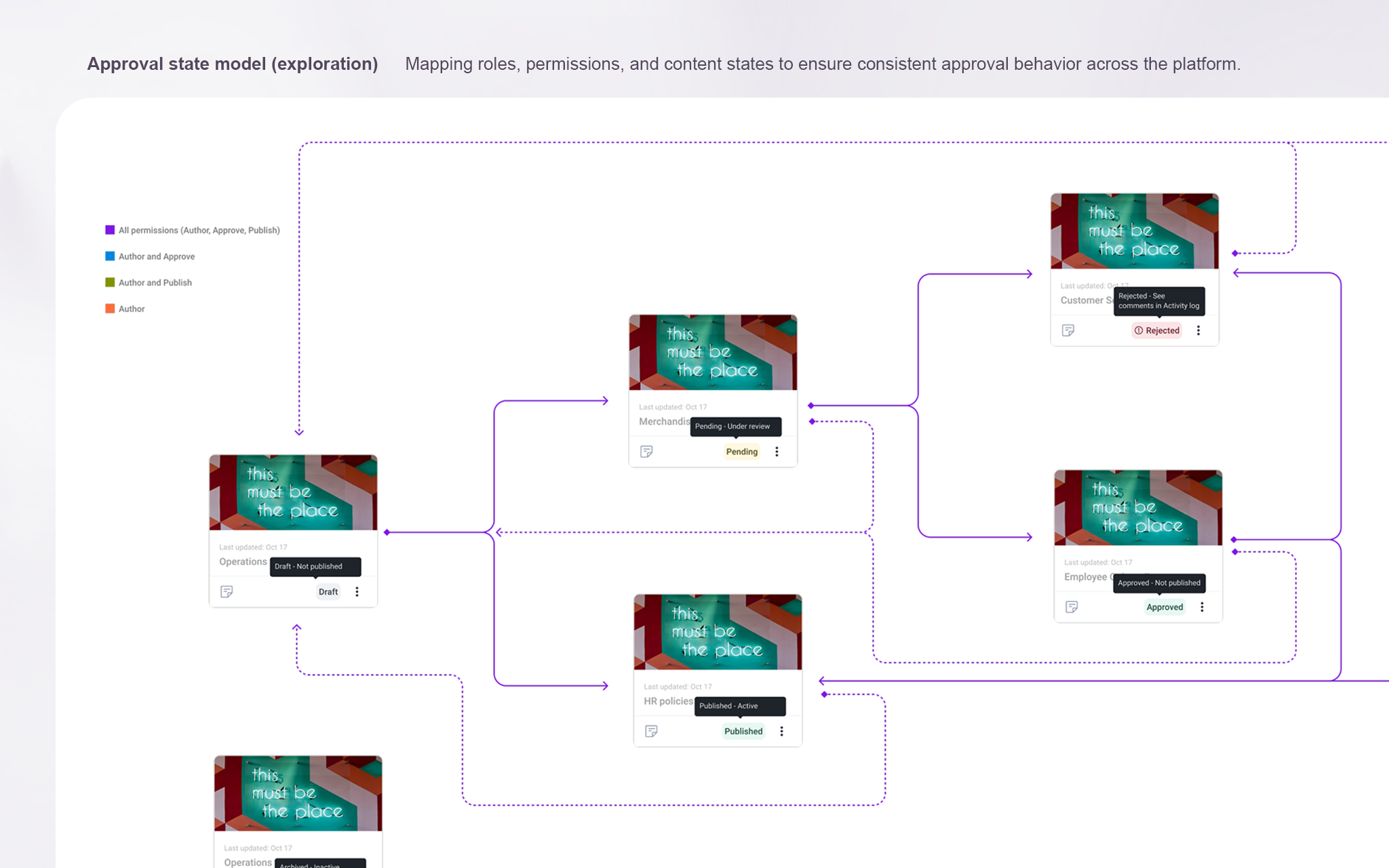
During exploration, I used AI tools to help map approval flows, pressure-test compliance scenarios, and simulate potential breakdowns across different organizational structures. This surfaced gaps around ownership, delegation, and escalation early, before they became design or implementation risks.
The result was a scalable governance model with clear ownership, visible approval states, and built-in accountability, without adding friction to everyday workflows.
Key design trade-off
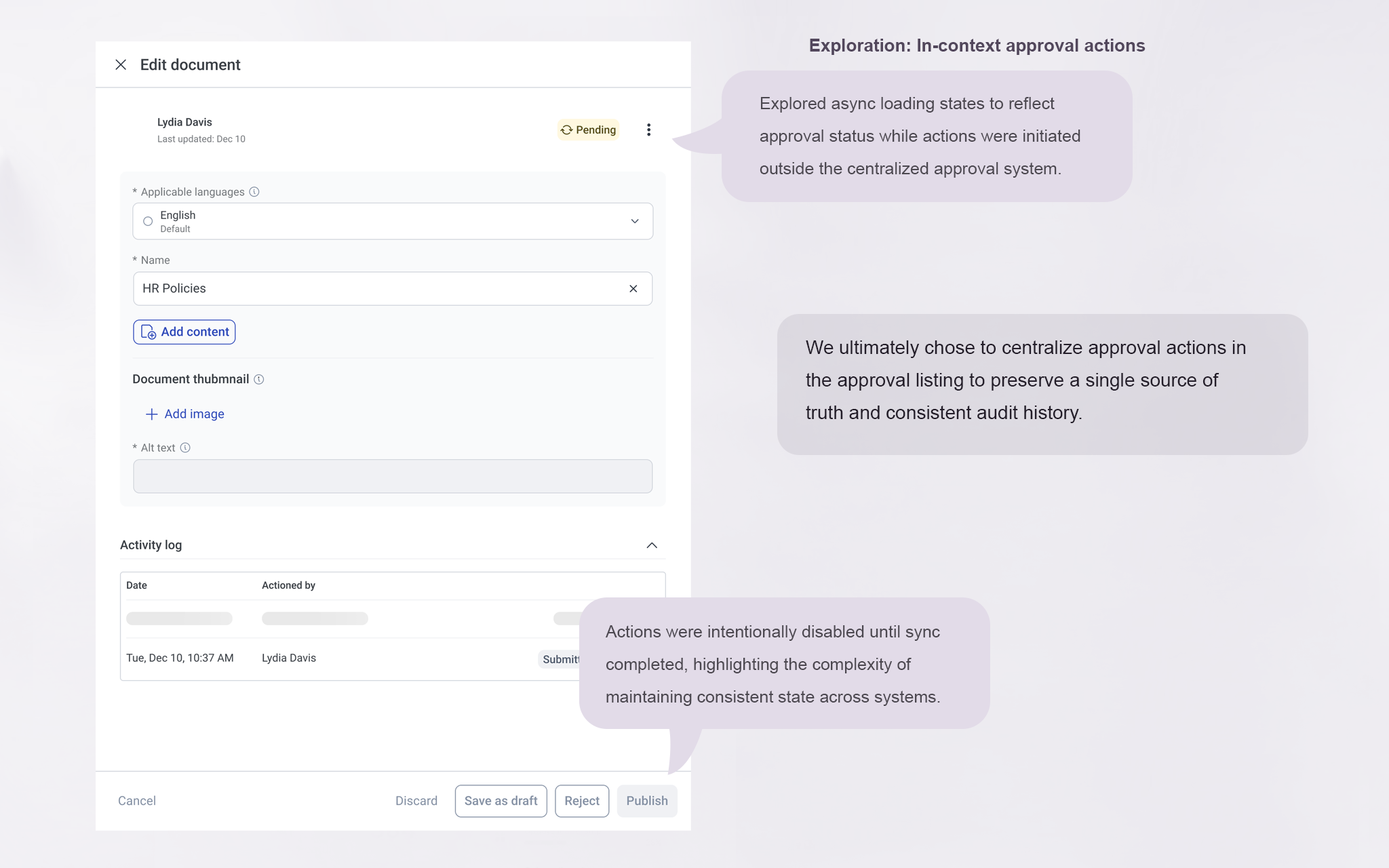
One challenge was deciding where approval actions should happen. Content could be reviewed inside Knowledge Center, but the approval system itself lived in a centralized approval listing.
Allowing users to approve, reject, or publish directly from Knowledge Center risked creating inconsistencies between views. Status, history, and ownership could fall out of sync, weakening the approval system as a single source of truth.
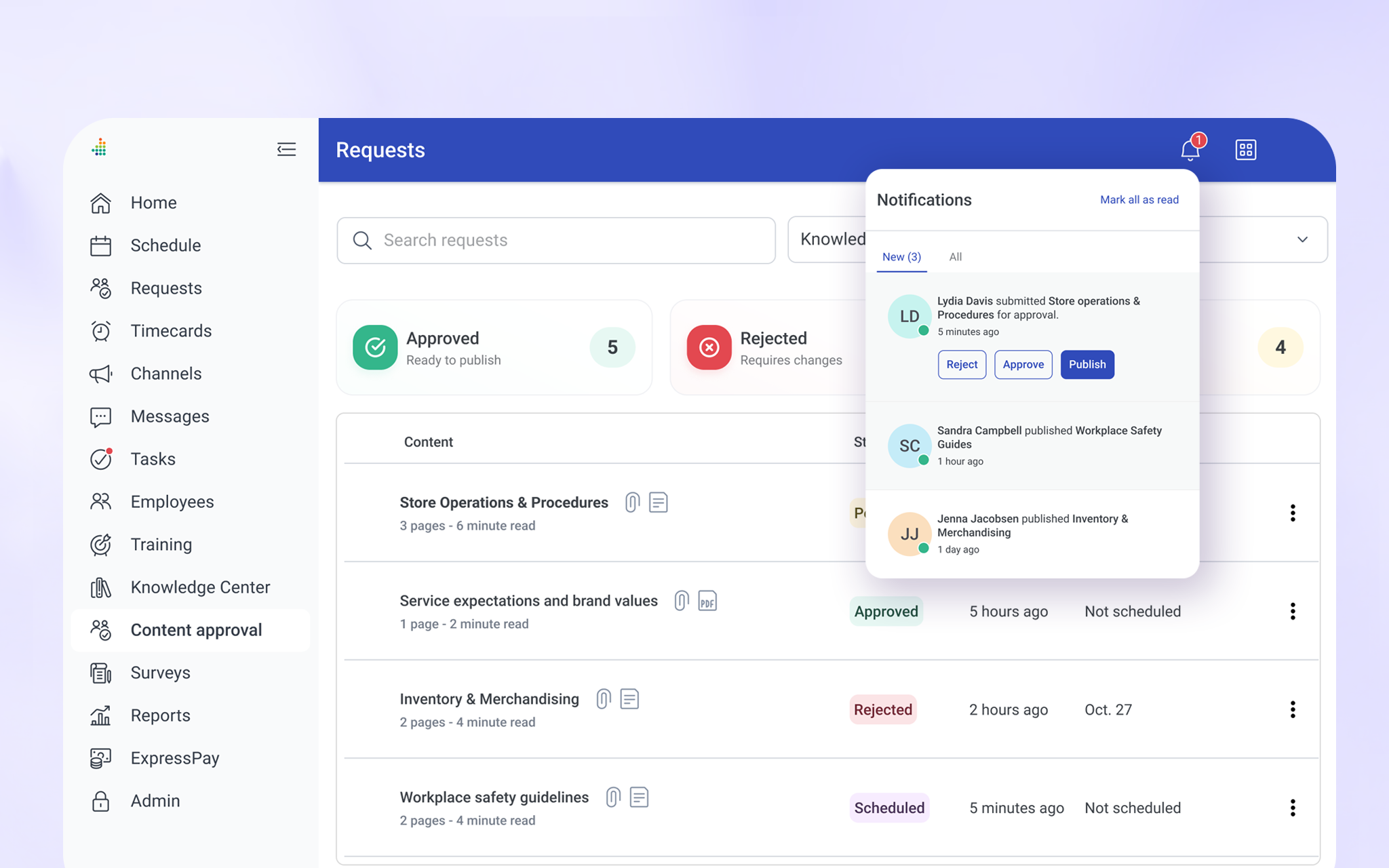
The trade-off was between convenience and consistency. I chose to guide users to the approval listing for final actions, ensuring approvals remained synchronized, traceable, and reliable across the platform. This decision prioritized trust and system integrity over local shortcuts.
The solution: A unified approval system of record
I designed a centralized approval system that acts as the single source of truth for reviewing, approving, and publishing content across the platform. While content can be created and reviewed in context, all final approval actions are intentionally handled through a shared approval listing to ensure consistency, traceability, and data integrity.
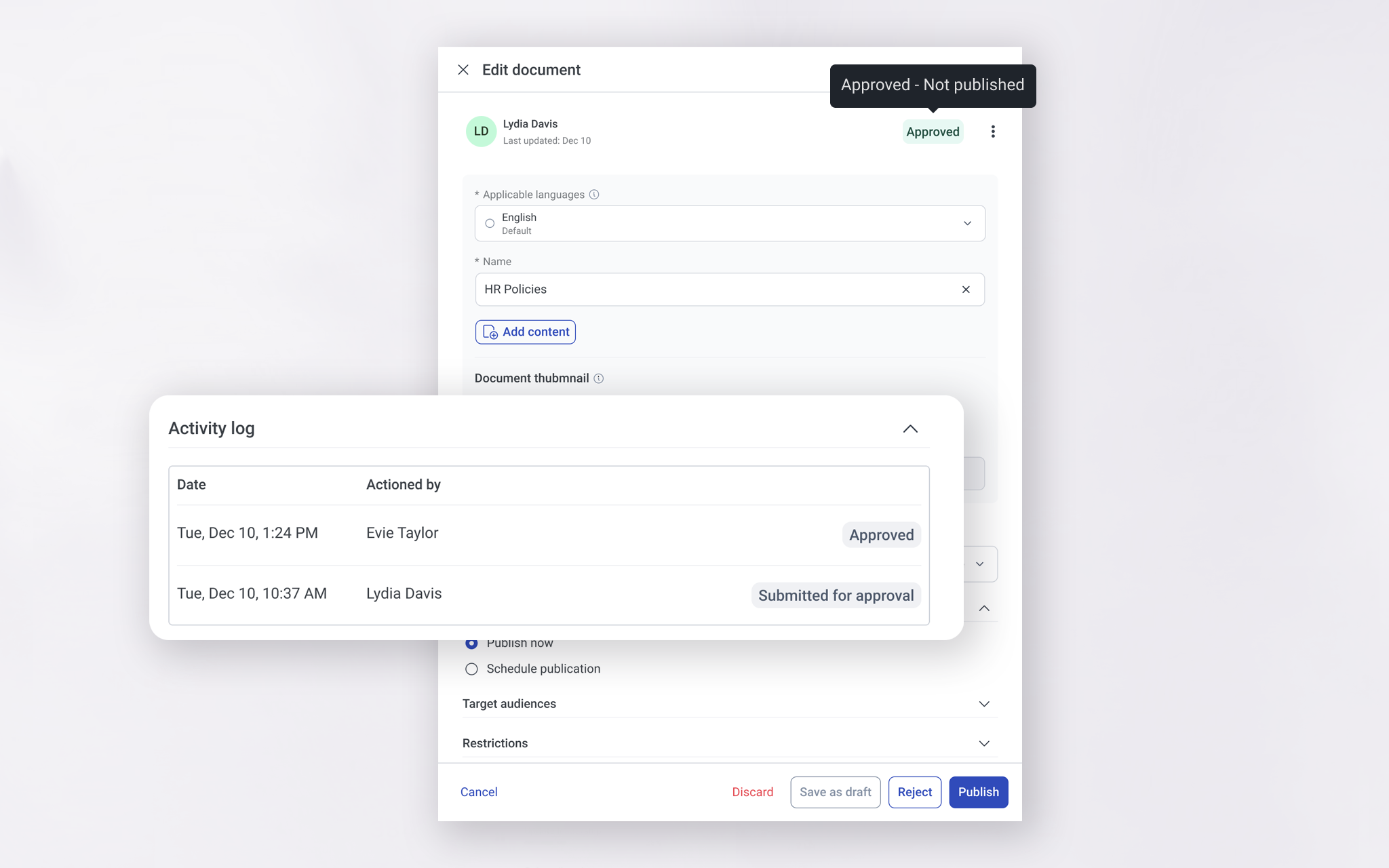
Approval state, ownership, and history are clearly surfaced at every stage, from draft to publication. By extending an existing approval model rather than introducing a parallel workflow, the system remains consistent with other platform behaviors and supports governance at scale without adding friction to everyday content creation.
Impact (before → after)
Eliminated
manual workarounds
Replaced informal approval practices (DMs, email, verbal sign-off) with a structured, in-product approval trail.
Auditable
system of record
Every approval, rejection, and publish action is now traceable, time-stamped, and role-aware.
Reduced
misleading content
Managers gained visibility into approval state, preventing unreviewed or incorrect content from being published.
Improved
accountability
Clear ownership and approval history reduced ambiguity around who approved what and why
How we validated these results
Impact was validated through workflow analysis, internal audits, and qualitative feedback comparing informal approval practices before launch with in-product usage after rollout. Results reflect consistent behavioral patterns across teams and content types.
Looking ahead
As a next step, I am exploring how the approval system could become more intelligent without removing human judgment. This includes surfacing what changed since the last approval, highlighting higher-risk content, and prioritizing reviews based on reach and urgency.
* A Note for Recruiters & Hiring Managers
This case study focuses on system design, governance, and decision clarity rather than visual polish. It reflects how I approach complex, cross-cutting problems where trust, scale, and human judgment are as important as usability.
I would be happy to walk you through a deep dive of this project during a 1:1 interview.
Quick wins
Pre-publication risk prevention
Before, issues were discovered after content was already live. Introducing approval before publication allowed teams to catch problems early, reducing retractions, edits, and damage control after employees had already seen the content.
Clear ownership and accountability
Approval roles and responsibilities were made explicit. Instead of guessing who reviewed or approved content, admins could clearly see ownership at every stage, reducing confusion and follow-ups.
Single source of truth
Approval state, history, and decisions now live in one place. This replaced informal sign-offs through chat or email with a consistent, auditable system of record teams could rely on.
Fewer manual workarounds
Admins no longer needed screenshots, message threads, or memory to track approvals. The system surfaced status and history directly in context, reducing manual checks and back-and-forth.
Role
Platform Design
Governance & Trust
Workflow Systems
Decision Support
Team & Partners
Product Management • Performance Strategy
Platform engineers • Responsible for the approval service
Product Manager • Roadmap Influence
Product owners • Domain experts
Customer success • Understanding risk scenarios across customers
Senior Designer • Lead
Duration
6 Months (Discovery → design → validation → rollout)